

Call for Submissions: Illustrating the Generative AI Product Safety Standards
In January 2026, the UK Department for Education (DfE) published the Generative AI: product safety standards - GOV.UK
As generative AI continues to evolve rapidly, we need to understand what these standards mean in practice and how they might apply to products and services used in education.
To support understanding of the standards, the UK Department for Education (DfE) is working with the Department of Education, University of Oxford to develop an accessible online resource that brings the standards to life through practical examples.
We invite you to submit visual examples that help bring the Product Safety Standards to life through imagined educational AI scenarios, interactions and product concepts. These examples may illustrate compliance with the standards or clear failures to meet them.
These submissions will contribute to a collection of clear, accessible examples of what safe and unsafe AI products might look like in practice. This resource will then be used to support children, parents, teachers and the public to actively engage with the government's public consultation later this year.
We believe that understanding what safe and effective AI looks like requires input from a wide range of people and perspectives.
We want to hear from children and young people, educators, parents, practitioners, academics, designers and developers from around the world. We are looking for creativity, imagination and new ideas. Different groups experience AI in different ways, and those experiences can provide valuable insight into what good, bad and challenging AI products might look like in practice.
By bringing together a diverse collection of examples, we hope to create a richer, more accessible and more inclusive conversation about the future of AI in education and the role that the Product Safety Standards can play in shaping it.
What we're looking for
We are seeking visual examples that explore a specific area of the Generative AI Product Safety Standards through an imagined product concept or user interaction.
This is a speculative design exercise, not a review of existing products. We are looking for illustrative examples of what compliant, non-compliant AI products or interactions might look like in practice. Submissions should present hypothetical products, features or interactions rather than evaluations of real-world products or services.
What to submit
Choose a specific educational use case, product feature or interaction and create one or more of the following:
- Compliant: an example that demonstrates alignment with a Product Safety Standard.
- Non-compliant: an example that demonstrates a failure to meet a Product Safety Standard.
- Edge case: an example that raises genuine questions about how a Product Safety Standard should be interpreted or applied.
You do not need to submit all three categories but you are welcome to.
Required outputs
For each submission, please provide a visual representation and short description. All submissions must use the template provided in the submission portal.
Scope
- Submissions should focus on an imagined interaction, feature or product function rather than an entire platform.
- Any educational use case is welcome.
- We encourage a broad range of interaction types and product concepts.
Global participation
We welcome submissions from anywhere in the world and encourage contributors to draw on diverse educational contexts, cultures and experiences.
We are particularly interested in concepts that reflect the perspectives, needs and experiences of children and young people.
Use of AI tools
AI-generated visuals and mock-ups are welcome.
However, we encourage contributors to develop their own concepts and design decisions before using AI tools to create visual representations. We are most interested in original thinking about the Product Safety Standards.
Using AI to visualise a concept you have designed is likely to produce more distinctive and valuable submissions than relying on AI to generate the concept itself.
What makes a strong submission?
We are particularly interested in submissions that:
- Clearly illustrate a specific area of the Product Safety Standards.
- Help explain the practical implications of the standards through concrete examples.
- Surface important trade-offs, ambiguities or implementation challenges.
- Are visually clear and accessible to a broad audience.
- Offer creative and thought-provoking perspectives on the future of AI in education.
- Help children and young people, parents, educators and developers better understand what safer AI products might look like in practice.
Consent
By making a submission you are consenting to feature your contribution (if selected) on the Department for Education and University of Oxford websites as part of the accessible online resource we are developing.
The submission form will request your name and the school / organisation you represent (if relevant).
Please note we anticipate receiving more submissions than we are able to include on the site but your contribution will be acknowledged.
Timeline
The call for submissions will be formally launched by Paul Waugh MP, Parliamentary Under-Secretary of State (Minister for Early Education), Department for Education at the UNESCO Digital Learning Week Reception on 9 September 2026. As part of his portfolio, Minister Waugh is responsible for use of data, digital technology and artificial intelligence (AI) in education.
The submission portal will be open from 14 September 2026 to 16 October 2026.
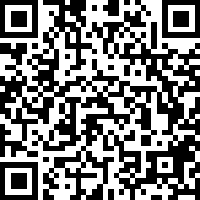
Scan the QR code to submit
The accessible online resource will be made available in November, supporting the launch of the public consultation on the UK GenAI Product Safety Standards in Autumn 2026.
Contact Details
For any questions, please email aieou@education.ox.ac.uk
Press enquiries should be directed to communications@education.ox.ac.uk